Best time to visit
The best time to visit Cambodia is from November to April.
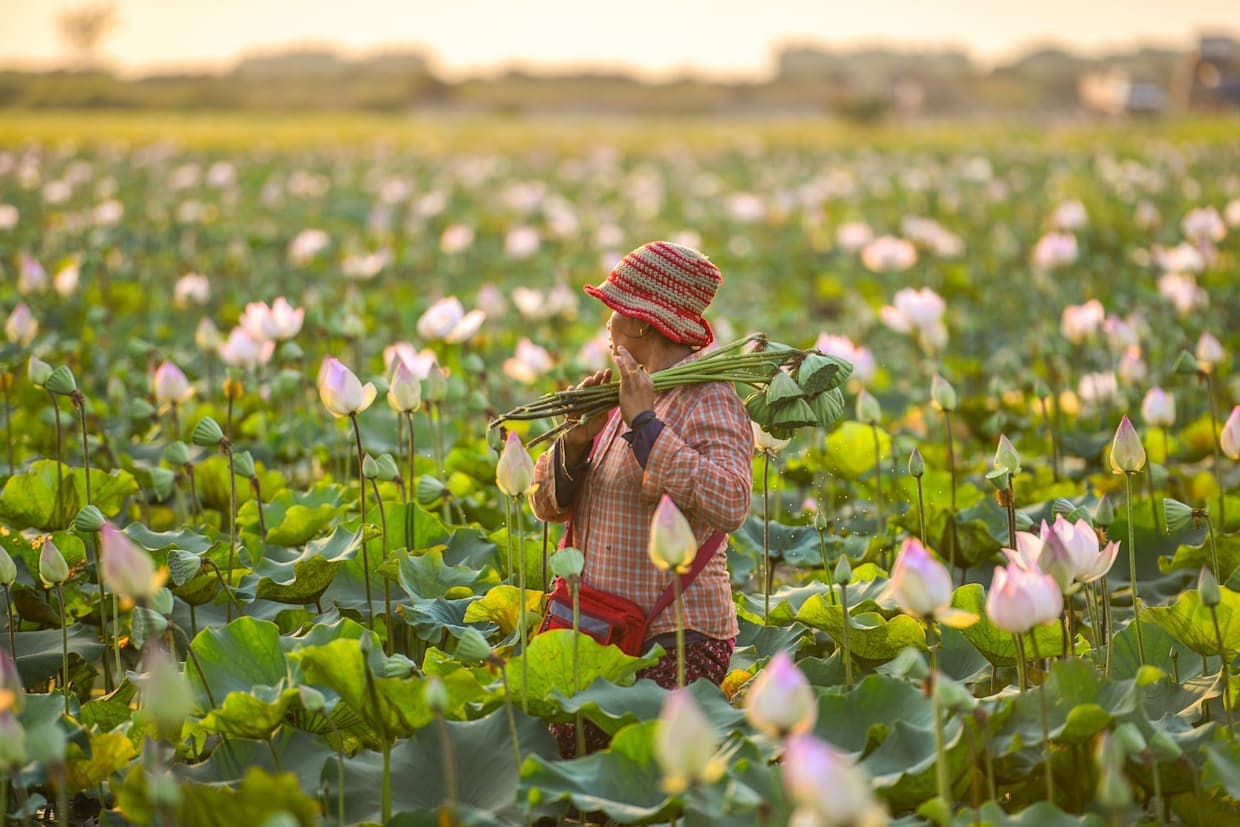
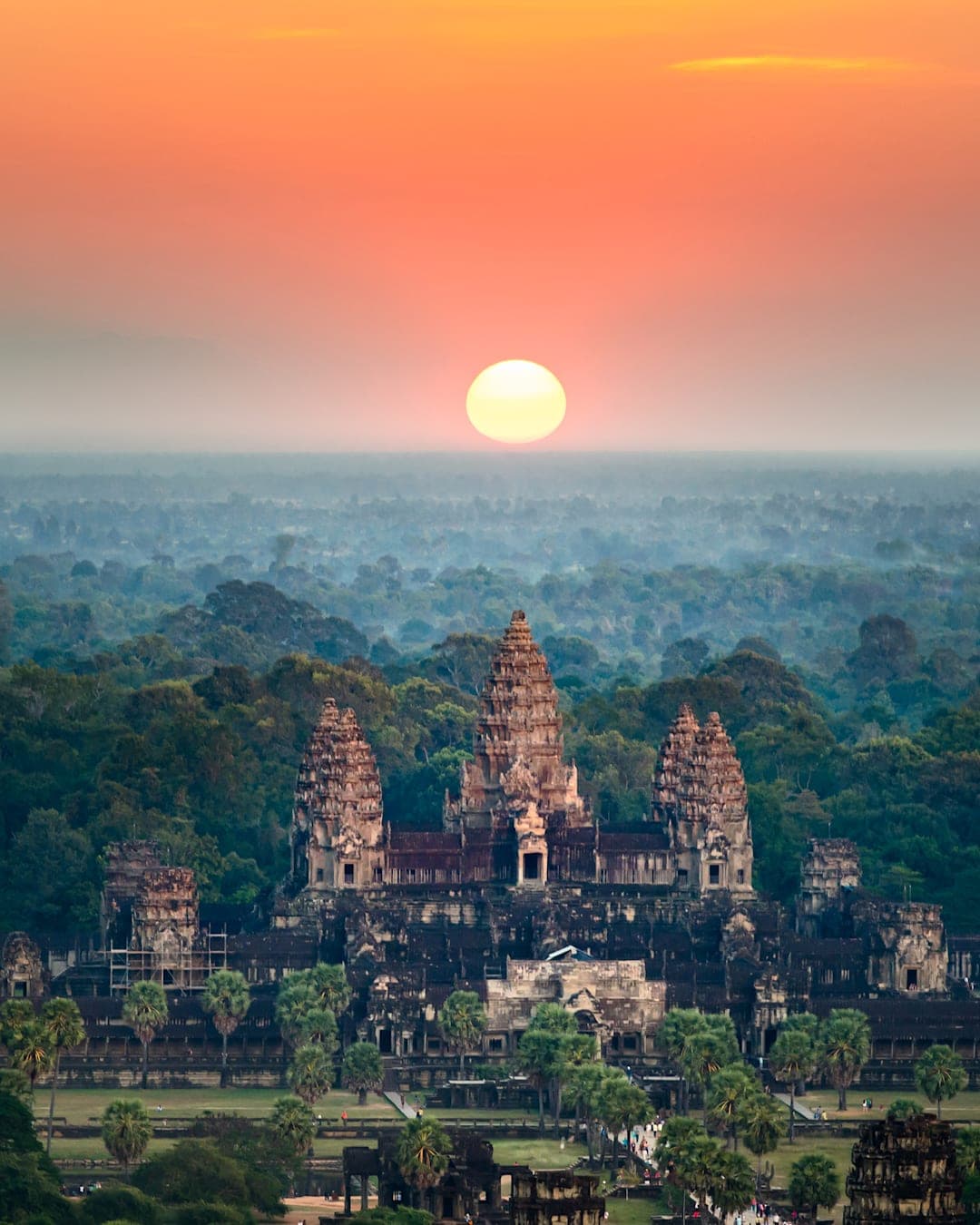
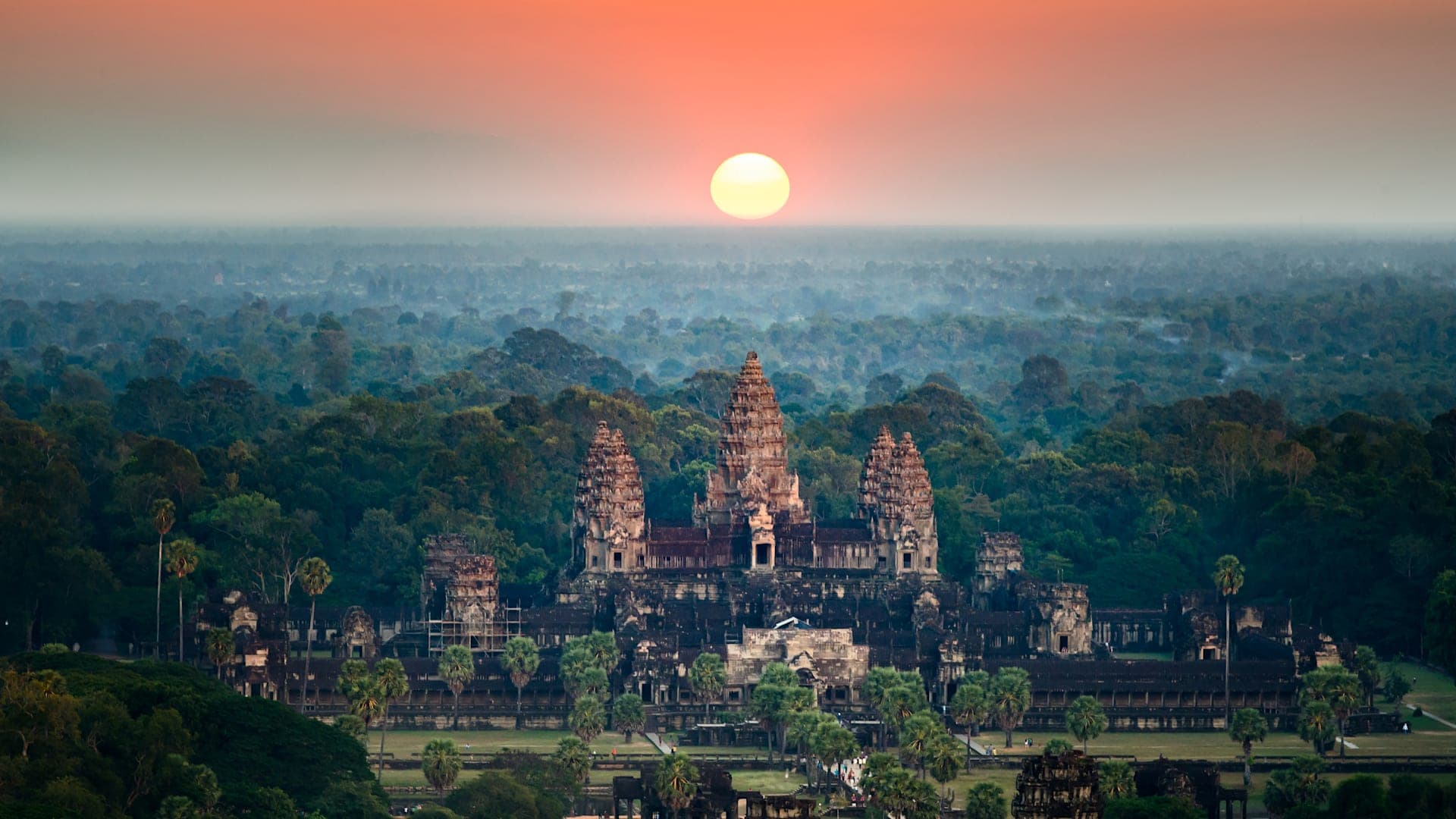
In Cambodia, trees grow over temples and villages float on water. Angkor alone stretches across 400 square kilometres, with over 1,000 ruins among roots and sandstone. But Cambodia reaches further: Irrawaddy dolphins surface next to your boat on the Mekong, and Lake Tonle Sap breathes with the seasons. At night on the south coast, the beach glows blue beneath your feet, Phnom Penh stacks royal palaces and street food stalls on top of one another, and off Sihanoukville the islands are almost entirely yours. You travel through temple ruins, floating villages, red earth and empty beaches – a trip to Cambodia looks different every time.
The best time to visit Cambodia is from November to April.
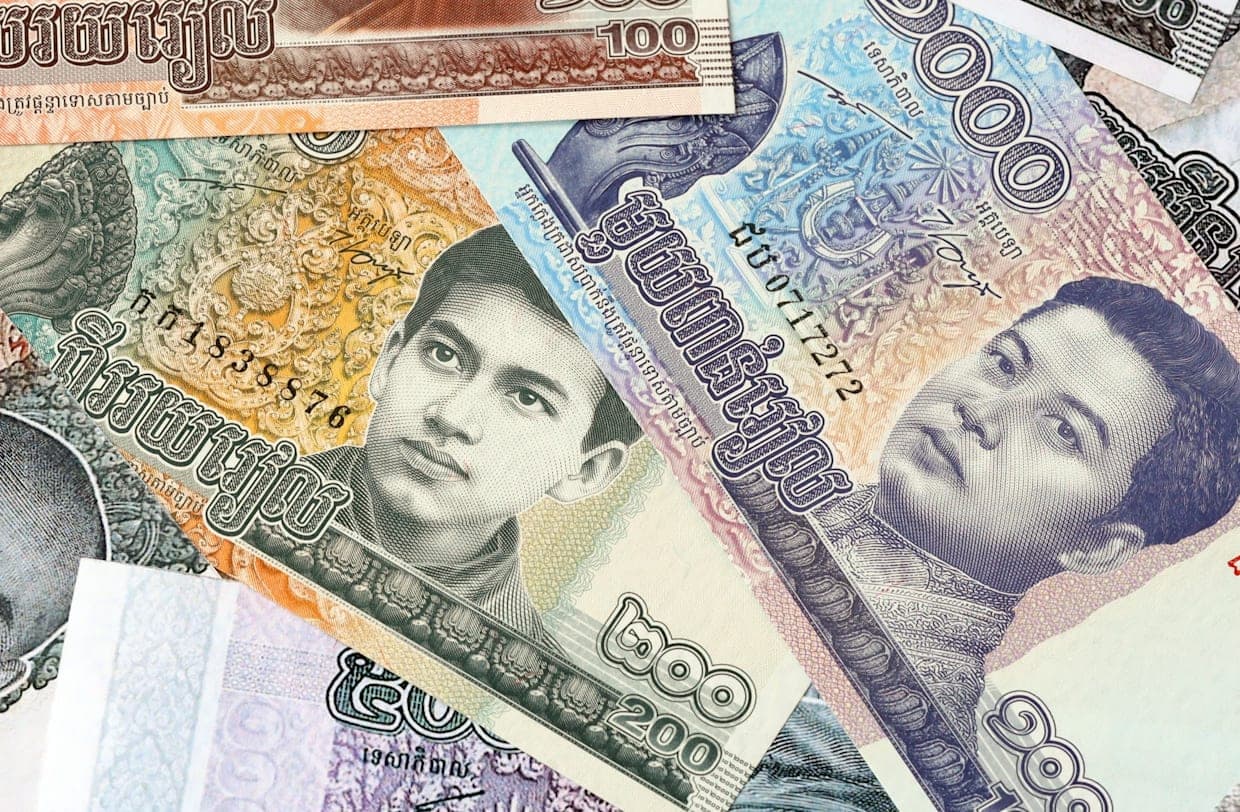
The official currency is the Cambodian riel (KHR).
Depending on the stopover, a flight from the UK to Cambodia takes between 13 and 18 hours.
The official language is Khmer. In the tourist areas around Siem Reap, Phnom Penh and along the coast, you'll get by easily with English.

Cambodia is full of highlights, but these must-sees belong on your bucket list.
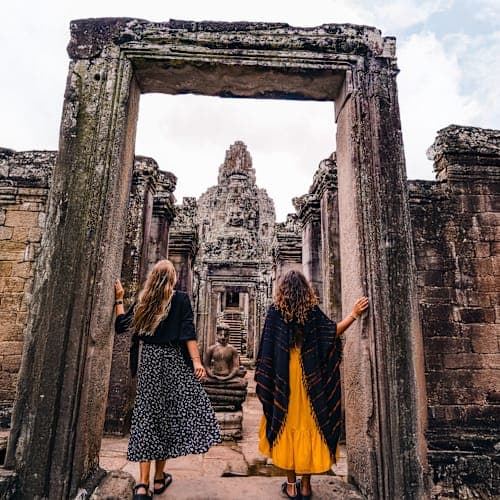
At sunrise over Angkor Wat, you stand before 900-year-old sandstone that changes colour with the light. The temples of Angkor spread across 400 square kilometres around Siem Reap – the deeper you go, the more the stone draws you in. The Bayon temple in Angkor Thom smiles at you with 200 faces, in Ta Prohm strangler figs force the walls apart and roots reach over doorways. At Banteay Srei you stop in your tracks – no temple is more finely carved. Further out, Beng Mealea sits half-collapsed in the jungle, and at Phnom Kulen water falls over sacred rocks into the valley below.
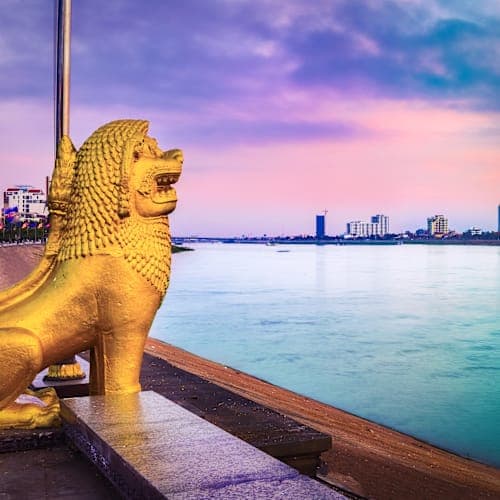
Phnom Penh is loud, fast and full of mopeds. The city's history begins at Wat Phnom on its hill, while the National Museum holds Cambodia's largest collection of ancient temple art. Along the Mekong waterfront, the Royal Palace shimmers in the light and in the evenings you sit by the Tonle Sap watching the boats go by. But Phnom Penh also carries a dark history. Tuol Sleng and the Killing Fields of Choeung Ek bear witness to the years of the Khmer Rouge – the memorials are silent. Cambodia doesn't hide this, and you shouldn't skip it. From the royal stupas of Oudong, you continue north to Siem Reap – but Phnom Penh stays with you long after you've left.
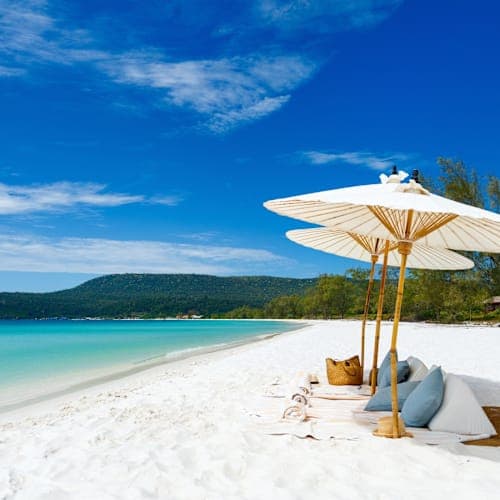
From Sihanoukville, the ferry takes you to Cambodia's islands, each quieter than the last. On Koh Rong, the beach glows blue beneath your feet at night. The smaller the island, the quieter it gets: Koh Rong Samloem knows only the sound of waves, Koh Ta Kiev barely even that. Back on the mainland, the mood shifts: Kampot smells of pepper from the plantations along the river, while above the town Bokor National Park disappears into the mist. The crabs in Kep come straight from the water to your plate, near Koh Kong mangroves stand in saltwater with jungle stretching all the way to the mountains behind. Here, the beach is usually all yours.
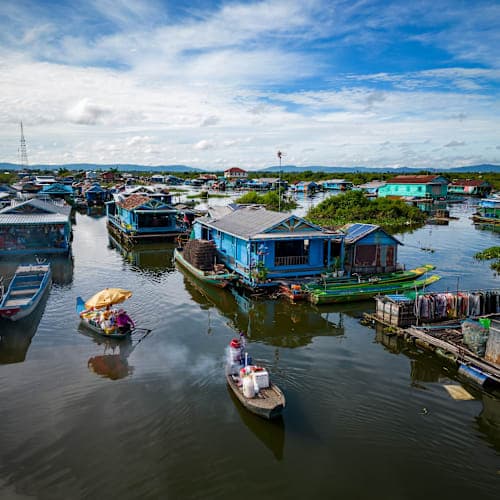
Lake Tonle Sap breathes – in the rainy season it swells to five times its size. The floating villages of Kampong Phluk and Kampong Khleang rise with it, everything built over the water. Battambang on the western shore is the quiet second city, and beyond it the Cardamom Mountains begin – Cambodia's densest jungle. Follow the Mekong from Kampong Cham and Irrawaddy dolphins surface alongside your boat near Kratie. At Stung Treng, the far bank is barely visible. Further out, the hills of Mondulkiri and Ratanakiri roll into view – red earth, crater lakes and no tarmac. Here you hear water buffalo before you hear engines.
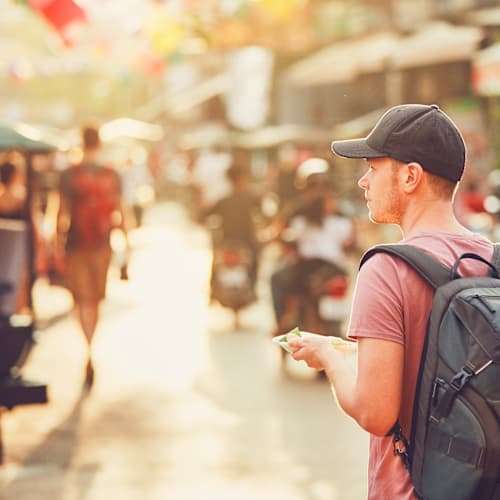
Cambodia borders three countries, and every border shifts everything: smells, language, street noise. Follow the Mekong south into Vietnam and you can be in Siem Reap in the morning and in the delta by evening, where boats drift between floating markets and noodle soup stalls. Combine Thailand and Cambodia and you move from Bangkok's street food to Angkor's sandstone – just six hours by bus separates the two worlds. Via Laos, the Mekong connects all three countries, from Luang Prabang to Phnom Penh – slowly, through dense green mountains and past villages reachable only by water.