Best time to visit
Morocco can be visited year-round. The best time depends on the region.
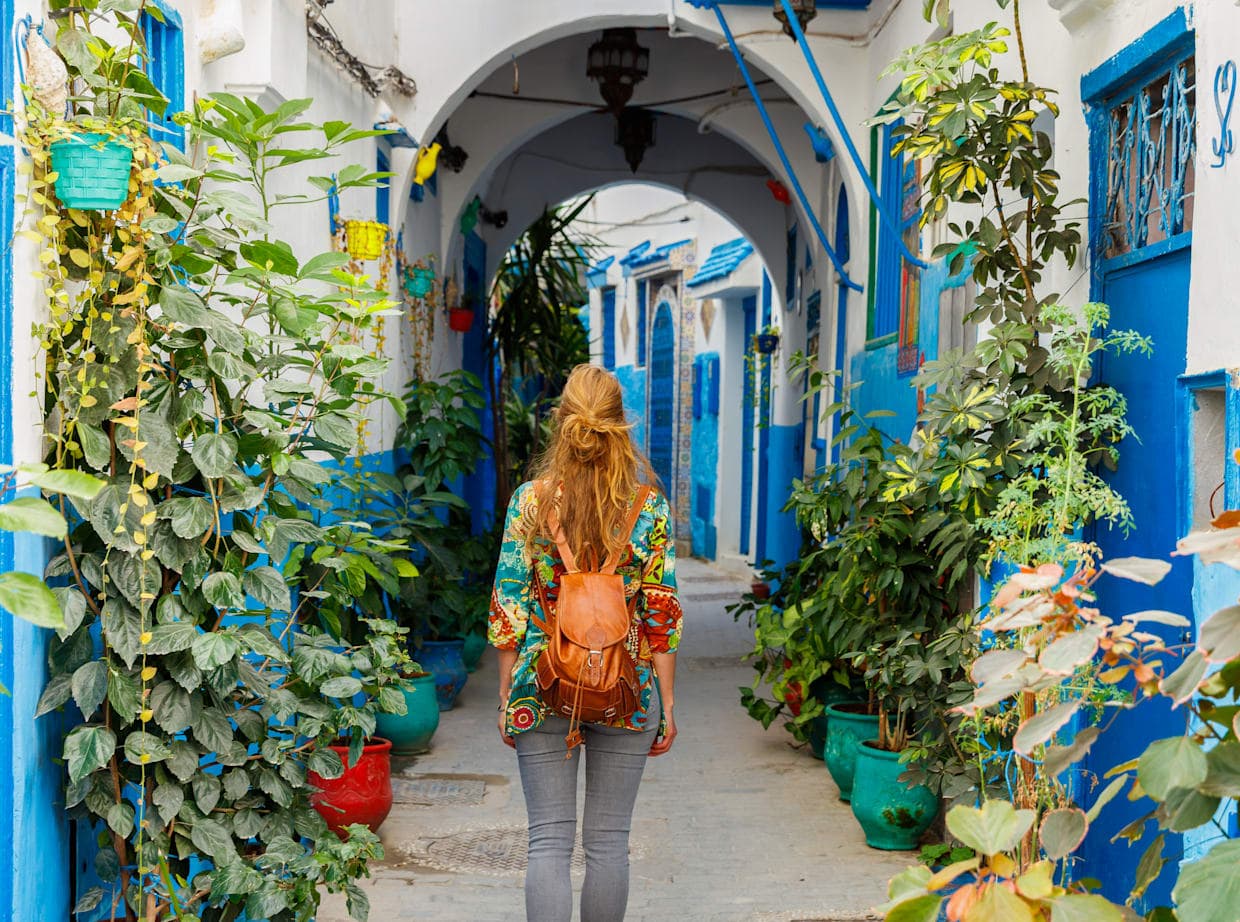
In Morocco, you can stand in a medina in the morning, a gorge at midday and on the Atlantic coast by evening – every hour smells different, sounds different and tastes different. The country measures itself not in kilometres but in contrasts: imperial cities alongside desert, mountains alongside surf, souks alongside silence. You walk through alleyways, gorges and over dunes, sleeping in riads and under the stars – nothing is behind glass, you're right in the middle of it all. On a road trip, you combine a round trip with beach days on the Atlantic coast, with the sea never more than a day's drive away. Between medina, desert camp, surf spot and mountain pass, you're hours apart, not days.
Morocco can be visited year-round. The best time depends on the region.
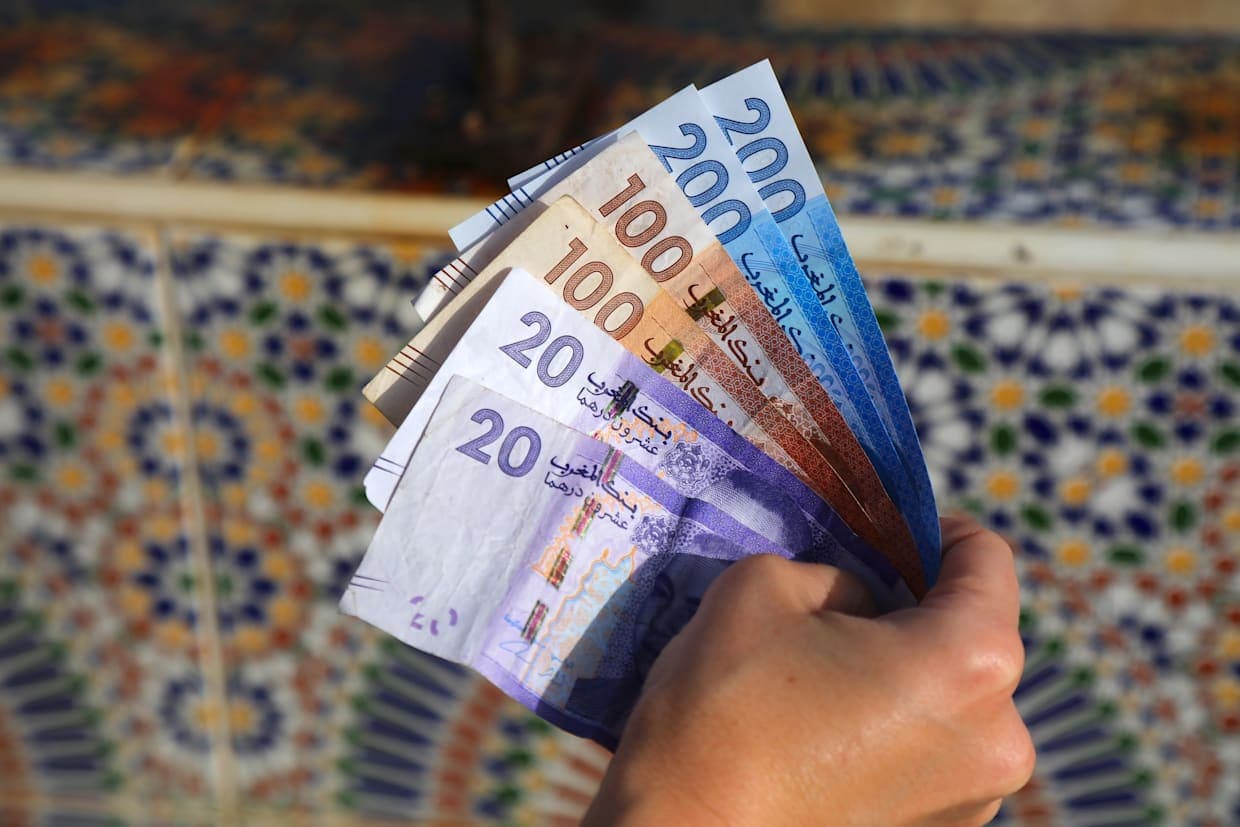
The local currency is the Moroccan dirham (MAD).
A direct flight from the UK to Morocco takes around 3 to 4 hours.
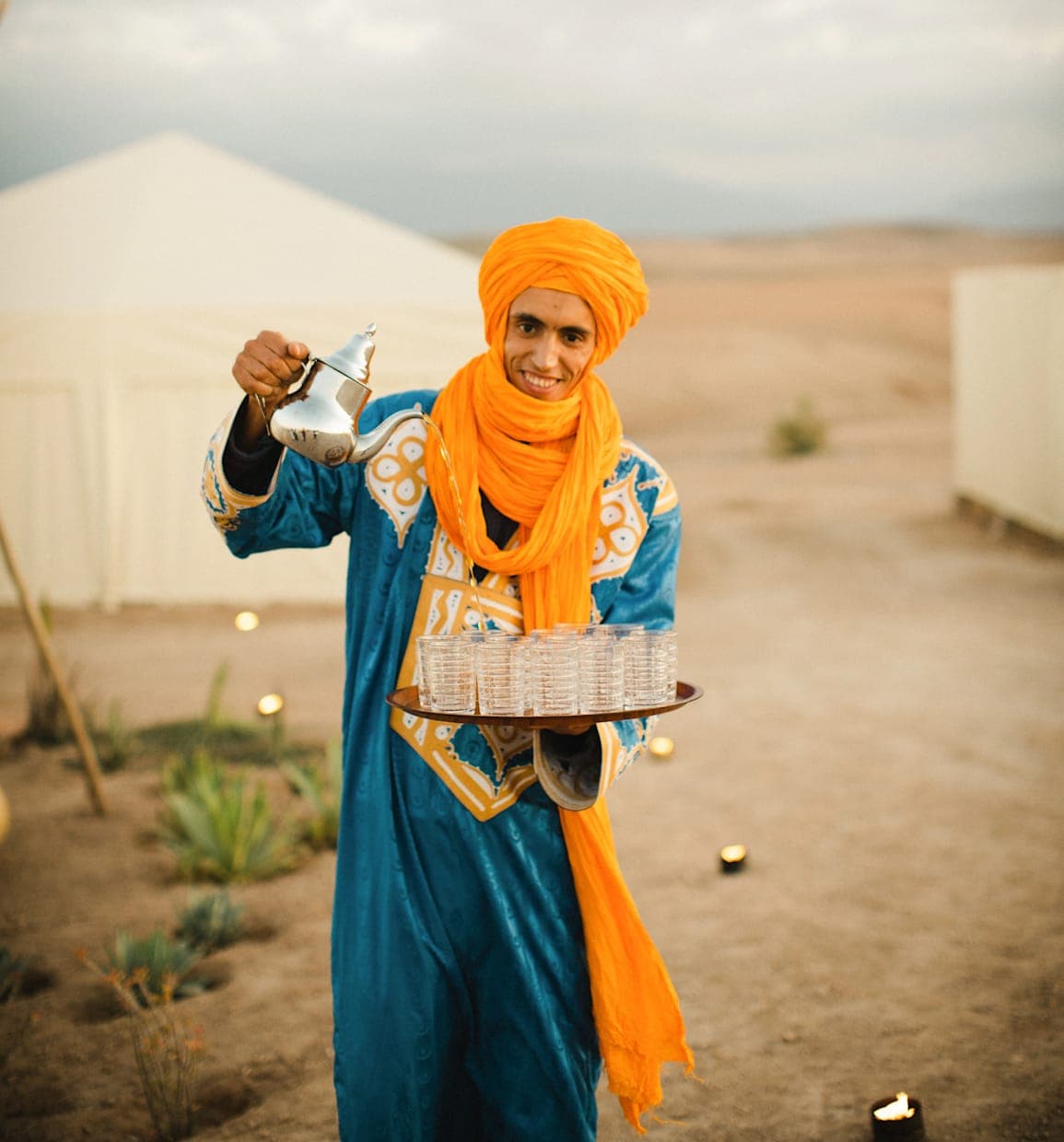
The official languages are Arabic and Tamazight (Berber). In tourist areas, you'll get by well with English or French.
Morocco is full of highlights, but these must-sees belong on your bucket list.
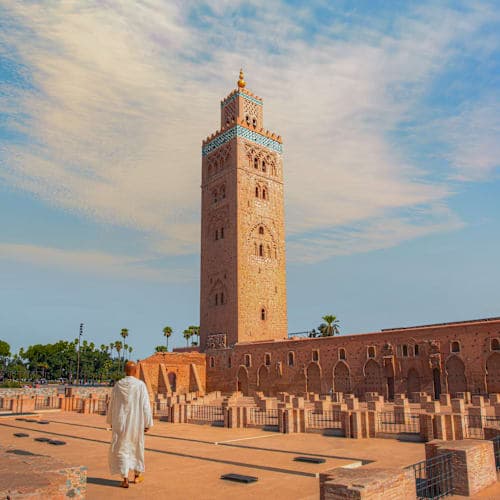
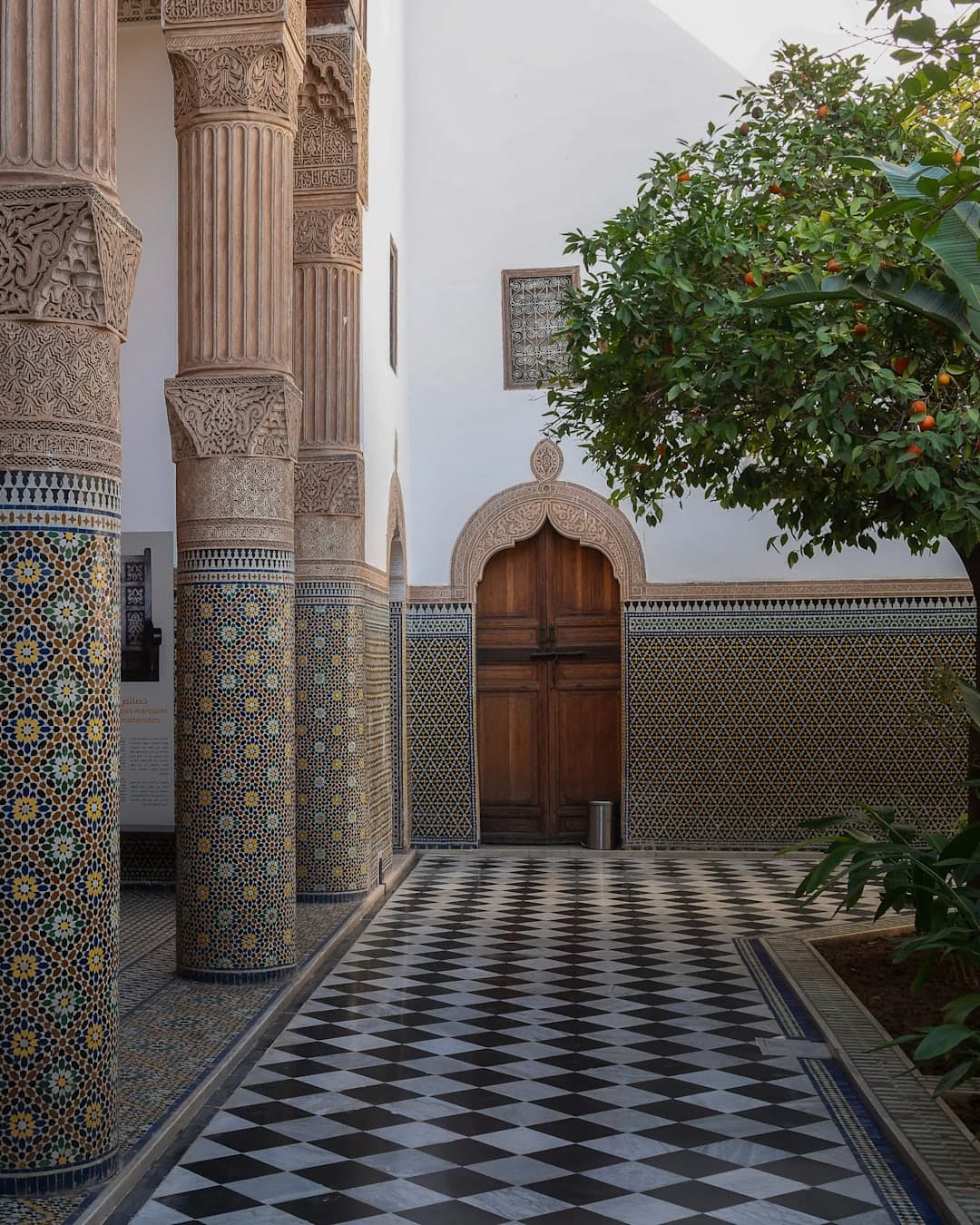
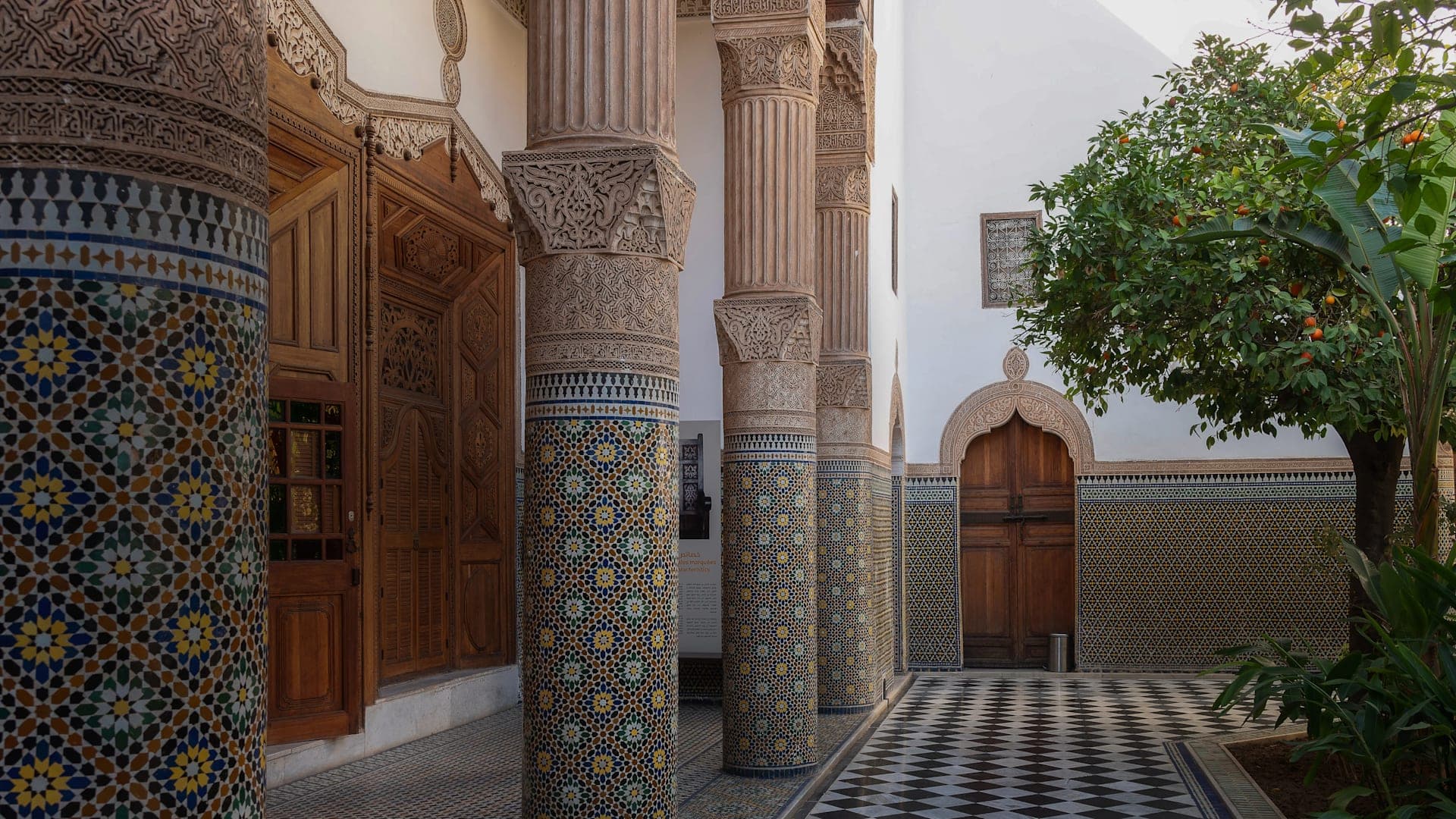
In the medina of Marrakech, cedarwood, mint and cumin hit you all at once. Follow the scent to the Djemaa el-Fna, where smoke rises above a hundred food stalls in the evenings. In the souks, spices are stacked into pyramids, and behind one unassuming door the Bahia Palace reveals zellige mosaics of a thousand hand-cut tiles. The Ben Youssef Madrasa carries plasterwork as fine as lacework, and right next door the Jardin Majorelle glows in cobalt blue. The 77-metre minaret of the Koutoubia Mosque marks the skyline – you can see it from every riad in the old town and hear the call to prayer five times a day.
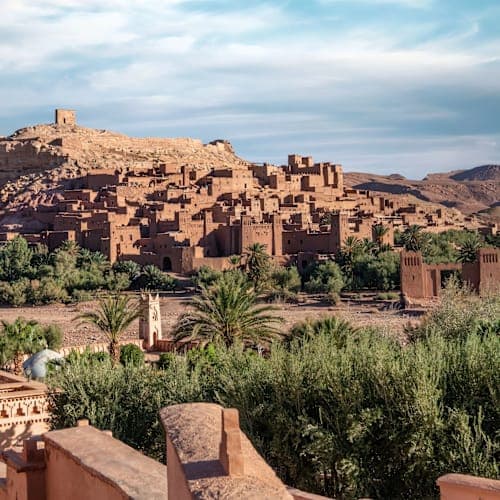
An hour from Marrakech, the Agafay Desert greets you with silence and stone. The road pulls you further towards Ouarzazate, through red valleys and past Aït Benhaddou – a mud fortress on the old caravan route, built from red earth for centuries. The Todra Gorge places 300-metre rock faces on either side of you, while the Dadès Gorge winds its way through switchbacks. Near Merzouga, the Erg Chebbi dunes rise 150 metres high – orange in the morning, red in the evening – the Sahara changing colour with the light. In Zagora, the last tarmac ends. Beyond it, you sleep on sand beneath nothing but stars.
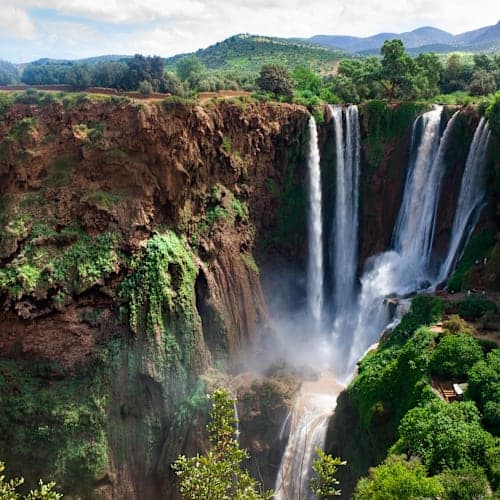
The Atlas Mountains in Morocco are greener than anything you might expect. In the Ourika Valley, you follow a river through terraced fields to Setti Fatma, where water tumbles over red rocks. The Ouzoud Falls plunge 100 metres into the depths below, the spray still hanging between the canyon walls. Imlil is the starting point for the ascent – the High Atlas grows more barren with every metre, and climbing Toubkal takes you to 4,167 metres, the highest point in North Africa. Near Azrou, Barbary macaques scramble through cedar trees, while nearby Ifrane, with its pitched rooftops, looks like a Swiss mountain village. It's Morocco's other side – a world away from any dune.
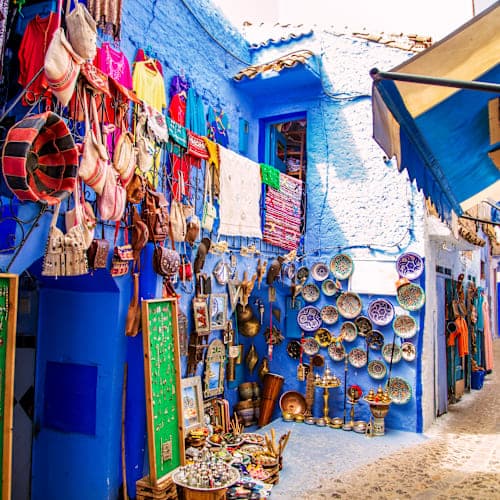
Morocco's imperial cities wear their history on the street. In Fès, you navigate through 9,000 alleyways with leather and cedarwood hanging in the air. Meknes sets the Bab Mansour against it all – one of the largest gateways in North Africa. The further north you go, the more the Mediterranean creeps into the atmosphere: Rabat brings together kasbah and coastline, while in Casablanca the Hassan II Mosque stands at the Atlantic with its 210-metre minaret. Chefchaouen, the blue city, clings to the hillside – every alleyway a different shade of blue. Tangier and Tetouan blend Spanish into the Arabic, just 14 kilometres from Spain – on a clear day you can see the coast.
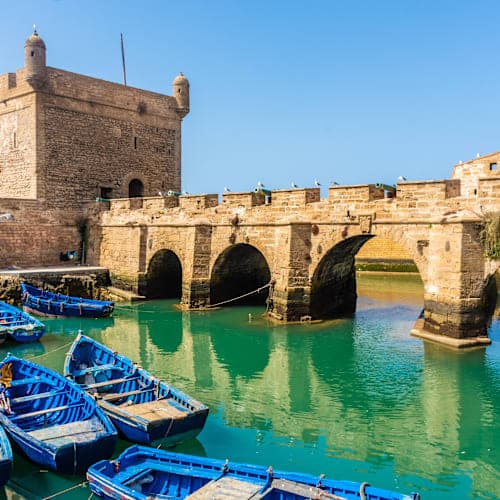
The Atlantic drives salt into every alleyway and waves onto the beach at Essaouira – blue boats, white walls and wind from every direction. Near Sidi Kaouki you surf almost alone, at Imsouane Morocco's longest wave rolls in towards you and at Taghazout you share the coastline with surfers and fishermen. Paradise Valley hides inland: natural pools between rocks, cold and clear. Agadir's beach stretches ten kilometres along the water, wide enough to find your own stretch of sand. Near Legzira, red stone arches frame the surf – beyond them, nothing but open Atlantic.